Gradera.ai
Defining the brand, marketing foundation, and early product UX for a zero-to-one AI platform entering a new category.

Gradera.ai engaged DodgeUX at a formative moment. The company had an early, single-page website that functioned as a placeholder rather than a true digital presence. While Gradera had a strong internal vision and experienced leadership team, that reality was not reflected in how the company showed up to customers, partners, or the market.
What began as a request to improve the website quickly expanded into defining a complete brand and marketing foundation. DodgeUX was brought in to establish how Gradera should look, sound, and present itself, and to translate that vision into a cohesive, multi-page site with a clear content strategy. In parallel, Gradera also needed a design partner to begin early product UX work, ensuring that brand, marketing, and product thinking evolved together from the outset.
Brand + Logo Strategy & Identity (0→1)
Generative Research
Product & UX Strategy
UX & UI Design
Early Product UX Strategy (0→1, confidential)
Cross-system Design Direction (Brand, Marketing, Product)
Scope
Role & Ownership
DodgeUX served as the lead design partner across brand, marketing, and early product UX. While final approvals lived with Gradera’s leadership team, DodgeUX owned vision, strategy, and execution, translating early positioning and abstract ideas into a tangible, cohesive system.
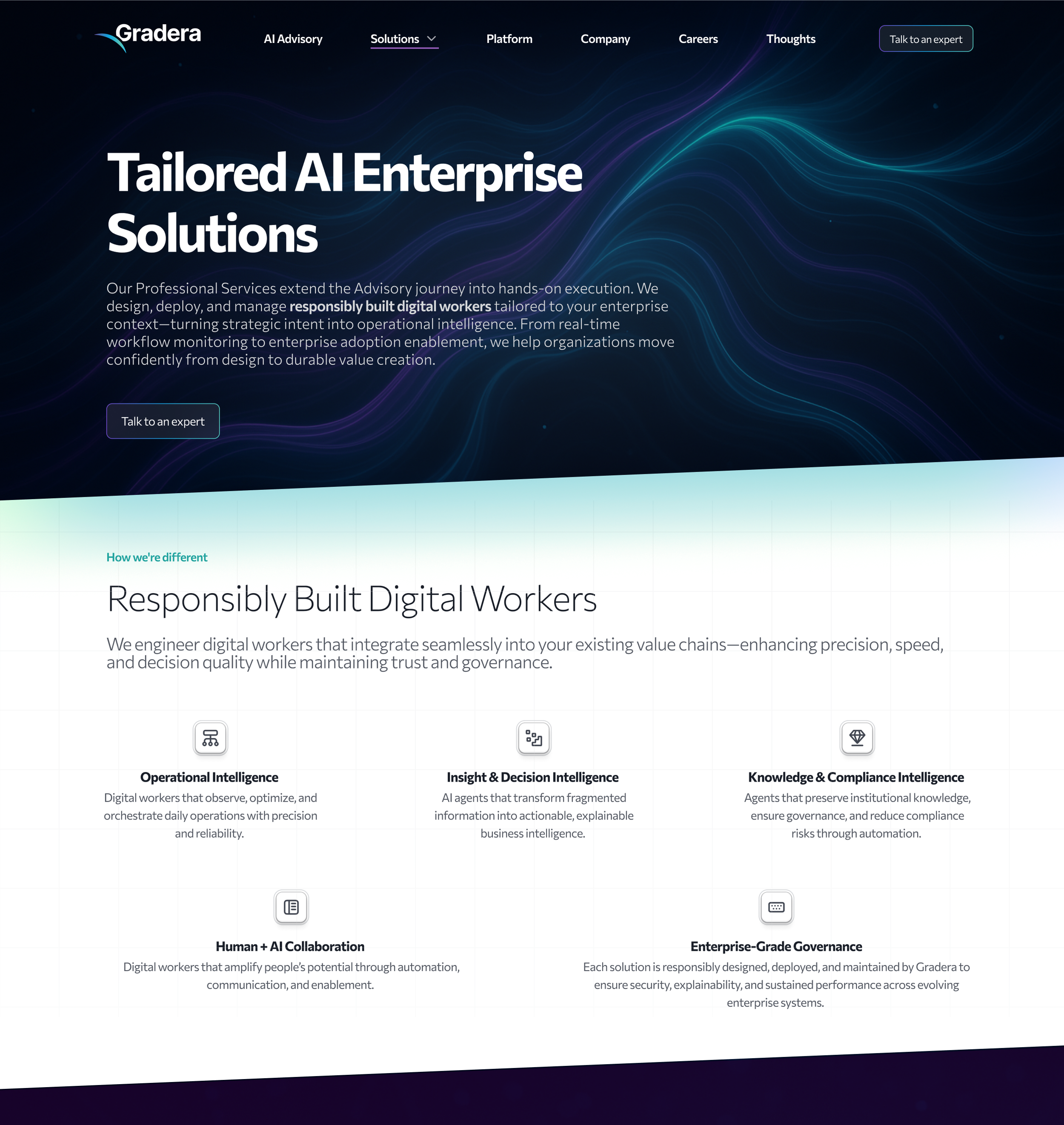
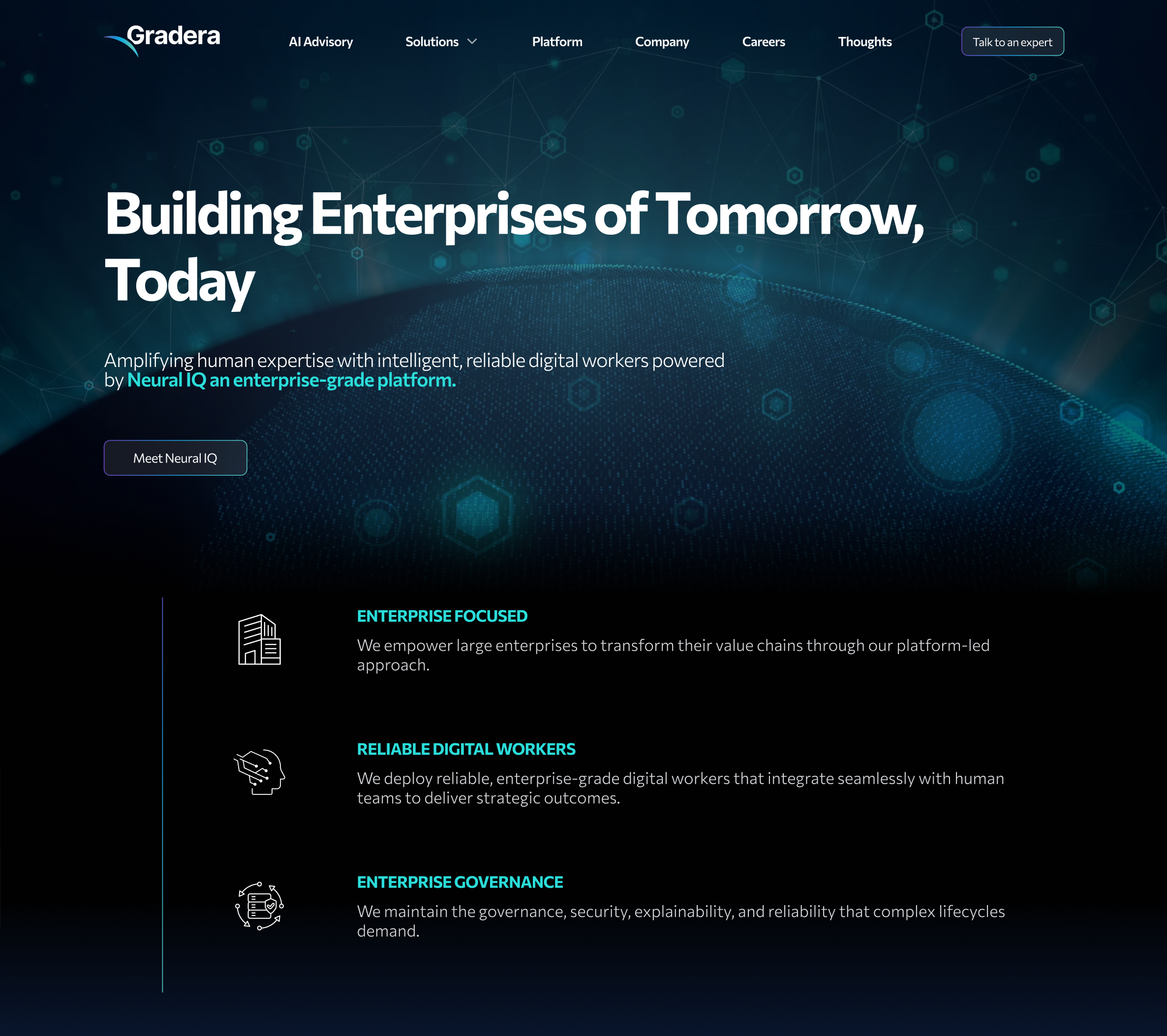
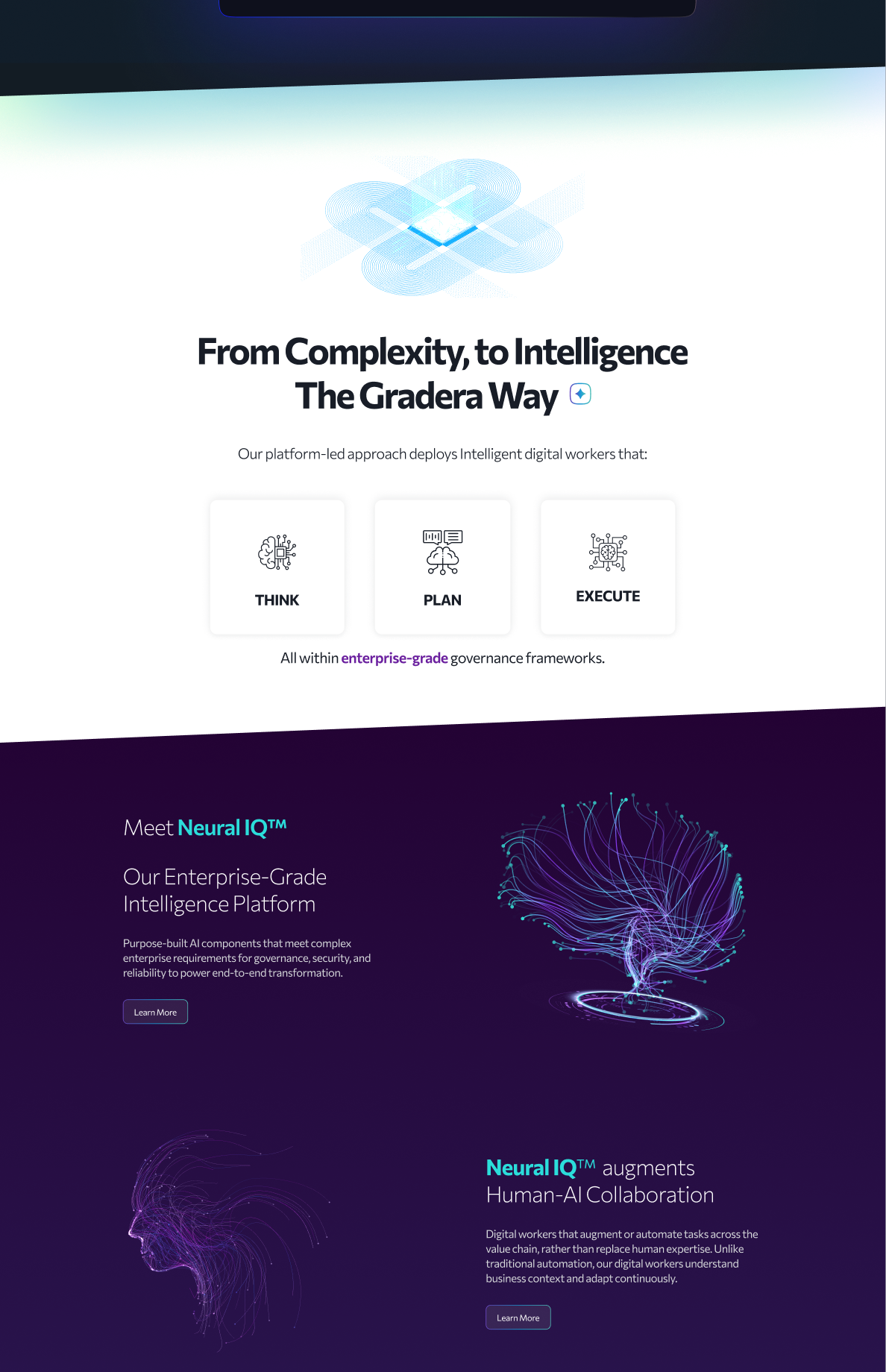
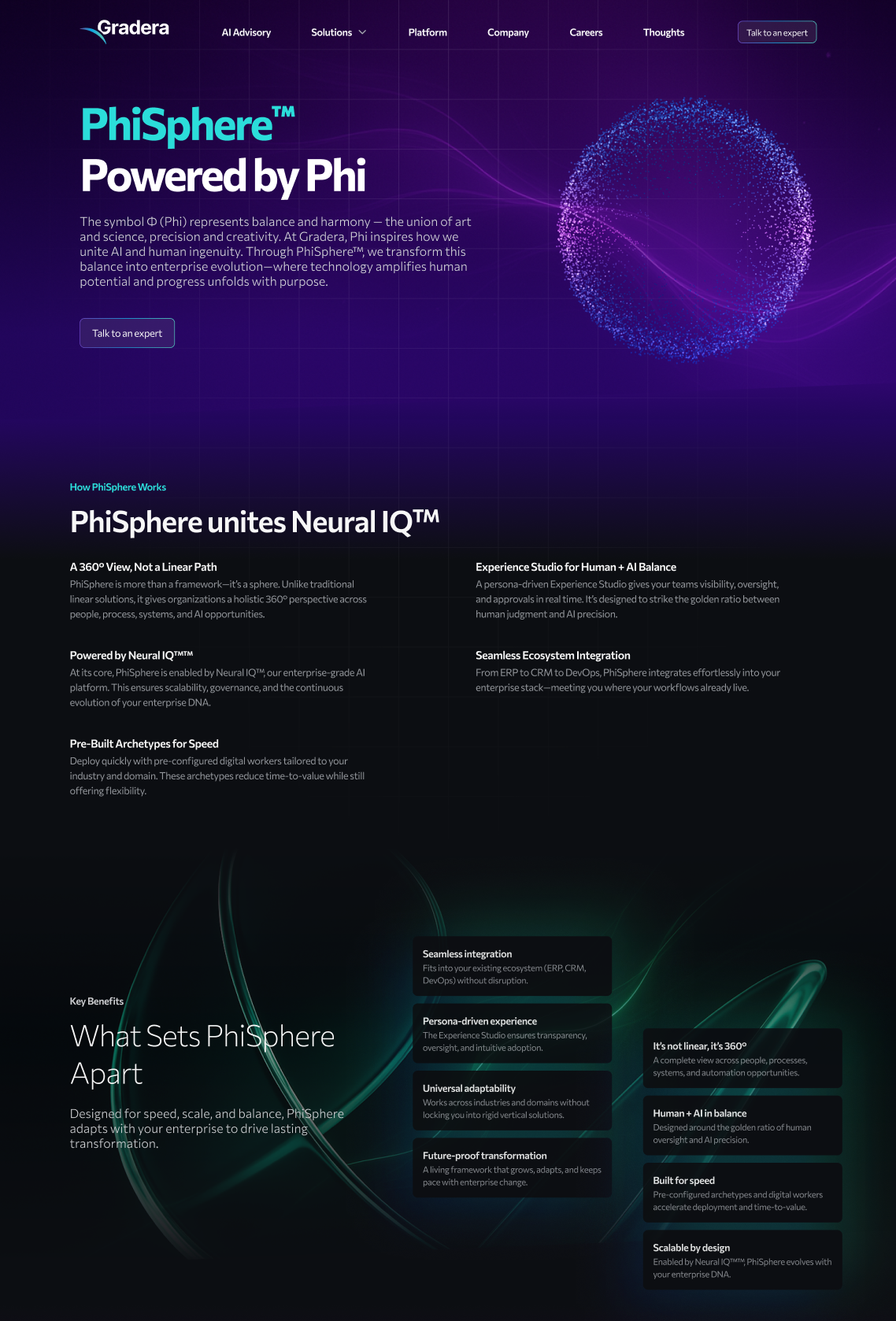
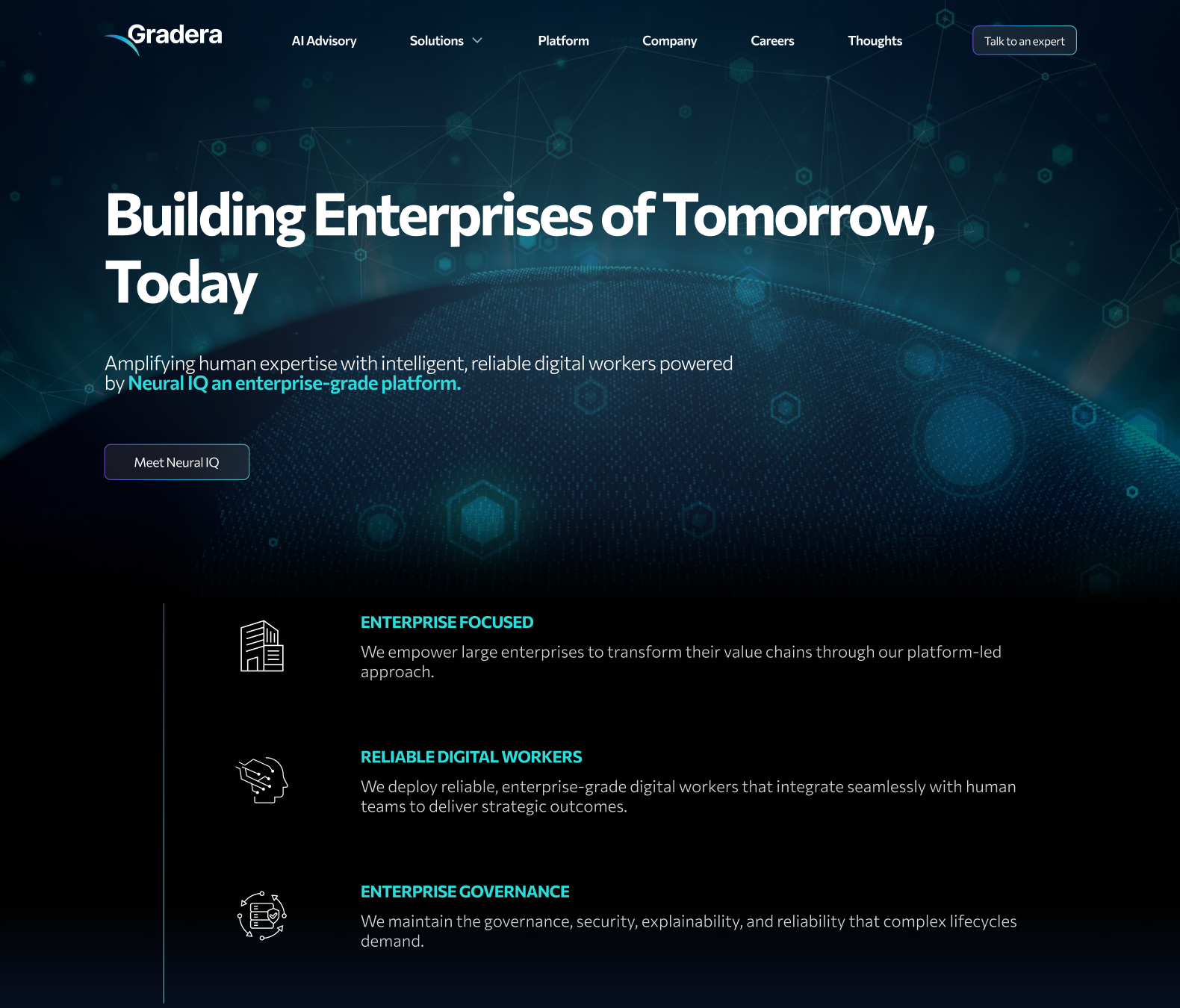
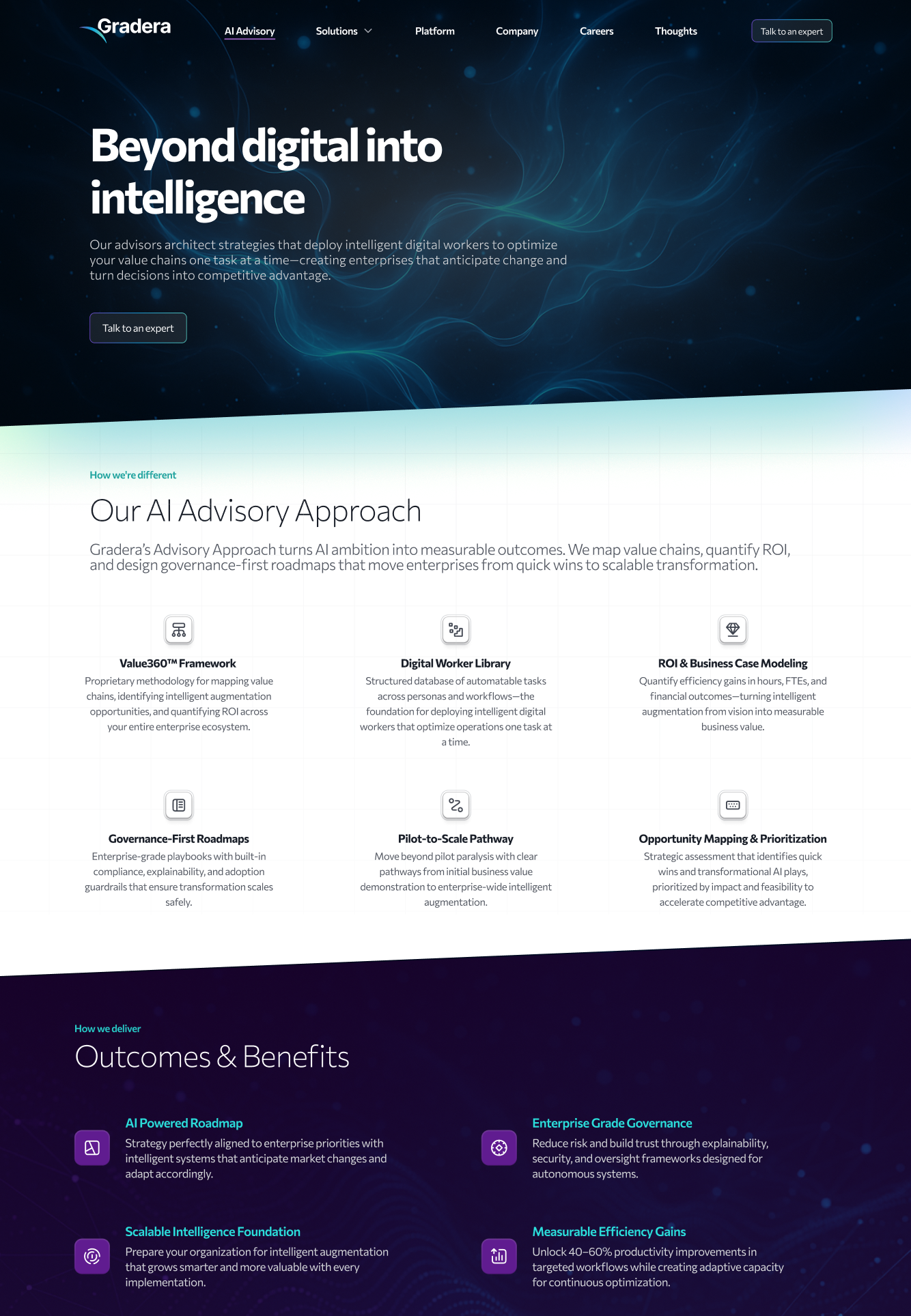
On the brand and marketing side, DodgeUX defined the visual identity, evolved the existing logo, introduced a new color system, and established a modern, moody aesthetic that could scale across digital and physical touchpoints. This included setting the tone for illustration, motion, layout, and narrative structure, as well as designing and directing all major brand and marketing assets.
DodgeUX also owned information architecture and content structure for the website, defining navigation, page hierarchy, and how Gradera’s story unfolded across the site. In parallel, DodgeUX partnered closely with engineering on early, confidential product UX work, helping define net-new interaction models and workflows for a platform that did not yet exist in the market.

The Real Problem
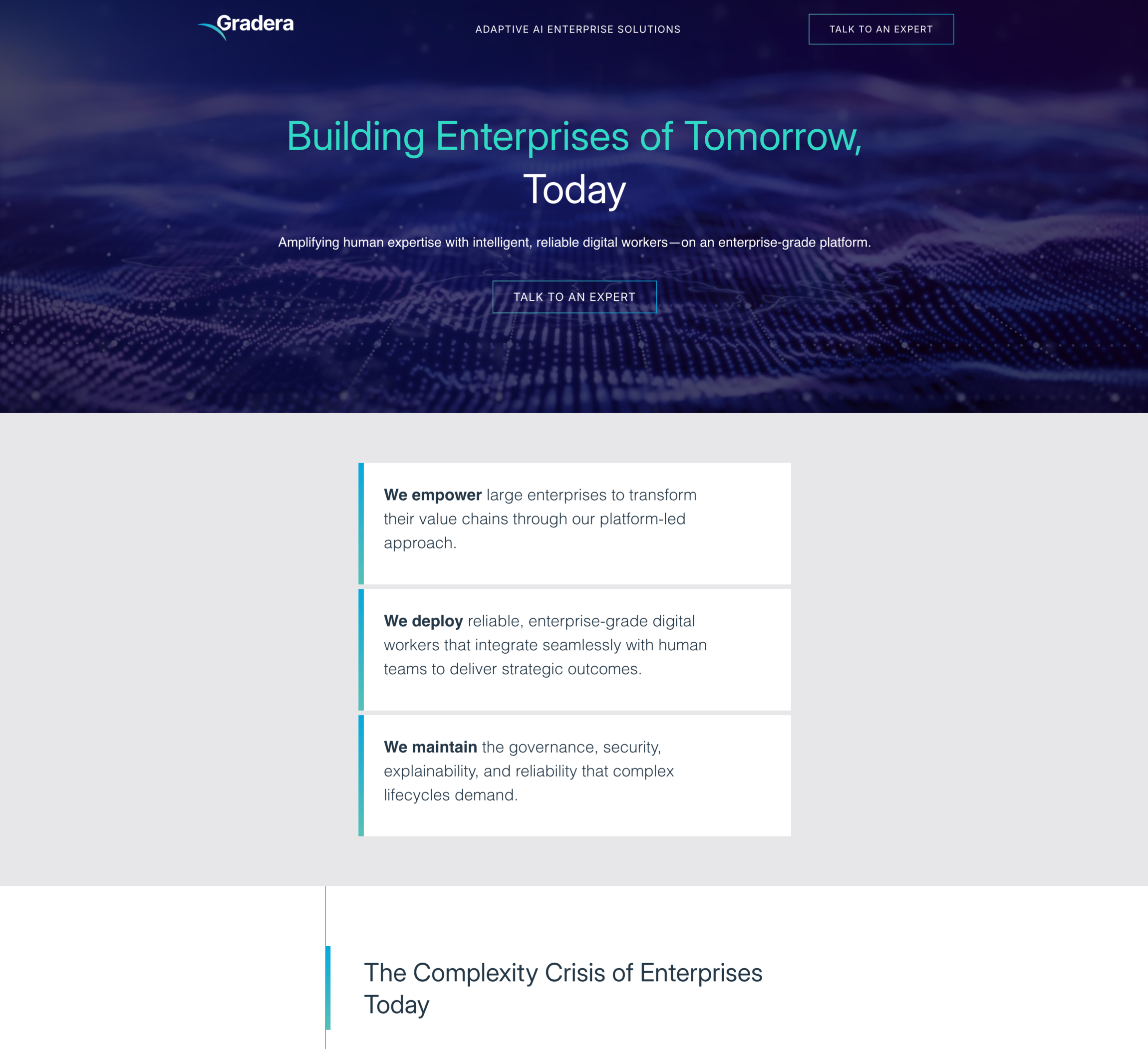
The challenge was not simply that Gradera’s website needed refinement. The deeper issue was misalignment between how the company operated internally and how it appeared externally.
The existing single-page site relied on outdated, service-oriented language that lacked depth, clarity, and credibility. It did not articulate what Gradera was building, how it was different, or why it mattered. Despite positioning itself as an AI-driven digital services company, the digital presence failed to signal that sophistication to prospective buyers.
This created a go-to-market risk. Without a clear narrative, visual authority, or structured story, the website could not effectively support sales conversations, establish trust, or communicate value quickly to enterprise audiences encountering Gradera for the first time.
What Mattered Most
Speed mattered, but speed without clarity would have failed. The work needed to move quickly while still landing on the right message, tone, and structure, not just getting something new live.
Flexibility was essential. Messaging evolved in real time as ideas were pressure-tested, requiring the brand and site to support iteration without losing coherence. Every section needed to earn its place, clearly contributing to how Gradera articulated its value and differentiated itself in the market.
Above all, alignment mattered most. Visual design, language, and structure needed to work together to accurately represent what Gradera was building and selling, ensuring the final result was not only new, but meaningful and credible.
Key Decisions
One of the most important decisions was establishing and committing to a clear visual direction early. The brand needed to land decisively. Without a strong aesthetic foundation, progress across messaging, structure, and product would have stalled.
Another key decision was prioritizing momentum over perfection. DodgeUX focused on reaching a high bar for quality while avoiding over-polishing that would delay launch. This made it possible to get meaningful work live, then continue refining as positioning and messaging evolved.
Iteration was treated as a feature, not a flaw. Both marketing and product work were designed to support ongoing change, allowing Gradera to evolve without constant reinvention or fragmentation across systems.
The Work
he engagement began by evolving Gradera’s existing logo and visual identity, focusing on color depth, contrast, and tone rather than starting from scratch. This established a scalable foundation that could support brand, marketing, and product needs.
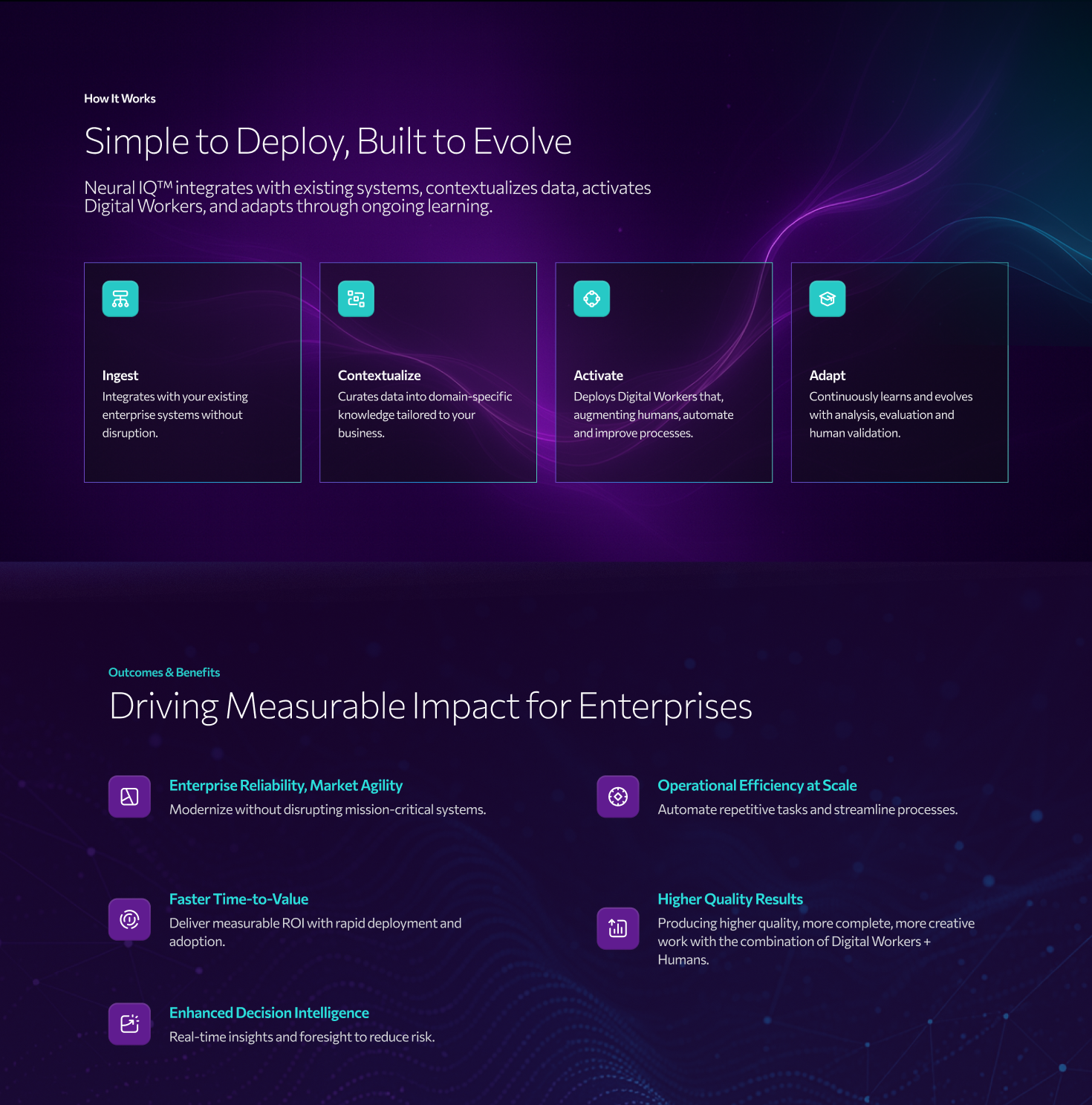
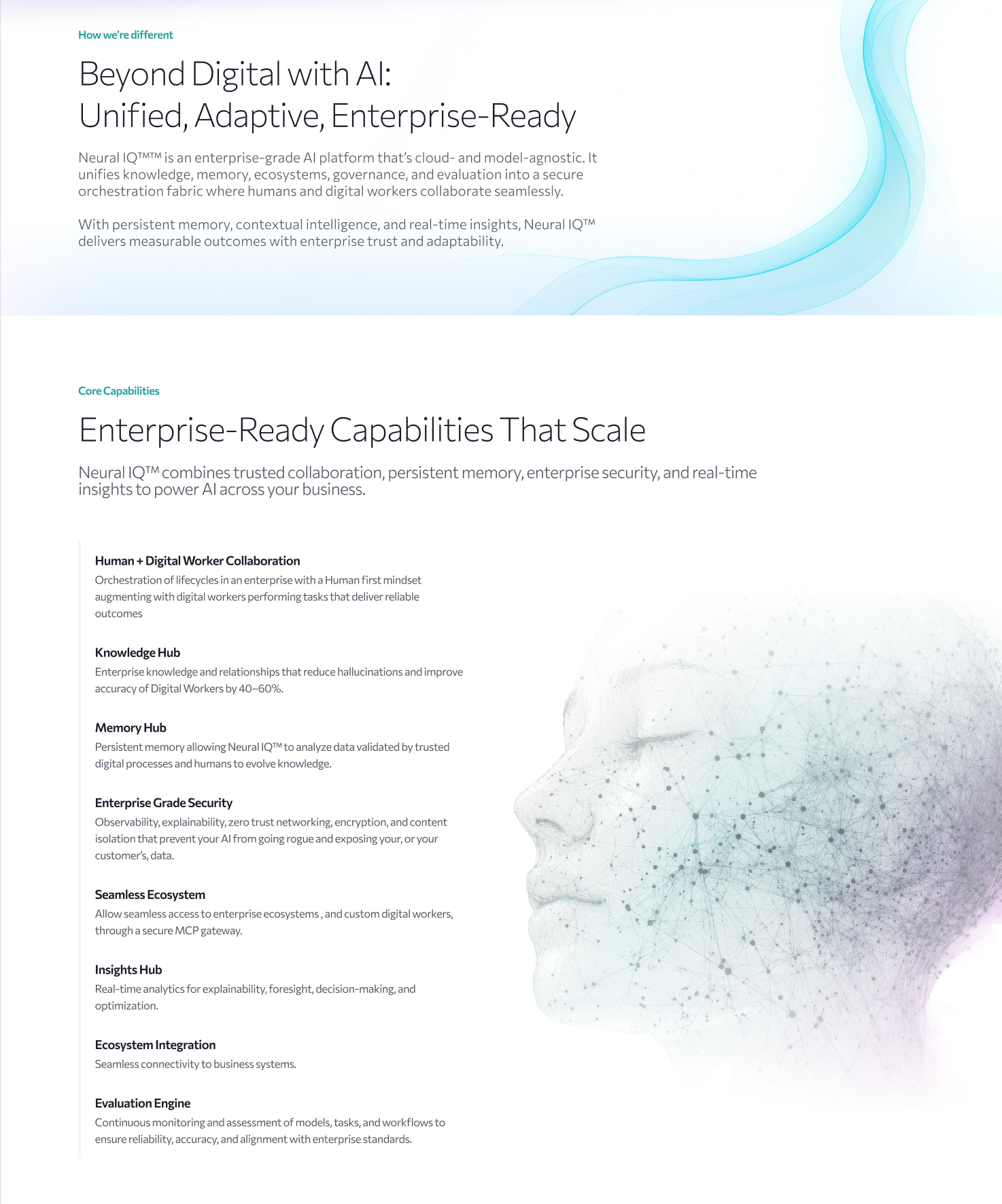
On the marketing side, DodgeUX transformed a single-page site into a structured, multi-page experience organized around Gradera’s core value propositions. This included pages that clearly articulated the market problem, the solutions Gradera was developing, and how those solutions addressed real customer needs. DodgeUX also supported broader brand execution through investor and conference pitch decks, trade-show assets, role banners, business cards, and social visuals, establishing consistent brand governance across channels.
In parallel, DodgeUX partnered with Gradera’s engineering team on early product UX design. This work involved designing multiple zero-to-one software experiences to support highly specific, contextual AI-driven use cases. While this product work is confidential and not shown publicly, it directly informed the brand and marketing direction, ensuring external storytelling was grounded in real product thinking and capability.
Outcome
The work fundamentally changed how Gradera showed up to the market. What began as a minimal, early-stage presence evolved into a credible, fully realized brand and marketing system capable of supporting serious enterprise conversations.
The new website and supporting assets established trust and legitimacy, signaling that Gradera could deliver on its ambitions. Rather than feeling experimental or underdeveloped, the company presented itself as a mature, well-positioned partner aligned with the expectations of large organizations.
While the product itself was net new, the design work helped bring it into existence with intention. Brand, marketing, and early product UX evolved together, allowing Gradera to move from an idea-stage presence to a company that could confidently engage with Fortune-100-level customers.