Sorcero
Leading 0→1 product design for an enterprise-ready AI platform.

Sorcero was an early-stage, venture-backed company composed primarily of data scientists and engineers. While the team had built sophisticated AI capabilities and secured pilot engagements within life sciences and insurance, there was no cohesive product.
Technology lived across disparate sandboxes and proof-of-concept implementations. The company could sell pilots, but it lacked a unified platform that enterprise buyers could clearly understand, adopt, and scale.
As the company matured and pursued larger enterprise opportunities, the need for product clarity and a structured platform became essential. Experimental capabilities needed to be translated into a coherent, usable system that could support repeatable growth.
0→1 Platform UX Strategy
Product Architecture & System Definition
Workflow & Interaction Design
Design System Foundation
Enterprise Data Visualization
Cross-Functional Product Leadership
Scope
Role & Ownership
As Sorcero’s first product and UX hire, DodgeUX’s founder joined as Principal Lead Product Designer to define and shape the company’s initial platform experience
Working directly with the CEO, CTO, Head of Marketing, sales, and product stakeholders, we helped translate sophisticated natural language processing and AI capabilities into a structured, usable system. The work went beyond interface design and into product definition — shaping how features surfaced, how workflows were structured, and how enterprise users would interact with complex domain-tuned intelligence.
We established the first design system, defined foundational interaction patterns, and influenced roadmap direction to ensure technical innovation aligned with real-world usability. In a highly technical environment driven by layered ontologies and domain-specific AI, the focus was on architecting user journeys that made advanced capabilities accessible, navigable, and enterprise-ready.

The Real Problem
Sorcero’s technology was advanced, but it lacked product structure.
AI capabilities lived across disparate sandbox environments and proof-of-concept implementations. Engineers were building powerful domain-tuned language intelligence tools, but there was no cohesive platform experience through which enterprise users could interact with them.
There was no defined workflow, no unified system architecture from a user perspective, and no structured interface that translated technical capability into practical value. While pilots could be delivered, the offering was difficult to scale, position, and productize because it did not yet exist as a formalized platform.
The core problem was not technical sophistication - it was the absence of product definition.
What Mattered Most
Clarity was non-negotiable.
Sorcero’s AI capabilities were technically advanced, but if users could not understand what the platform did — or how its outputs were generated — adoption would stall. Months were spent deeply understanding the underlying technology to ensure the experience accurately represented its capabilities without oversimplifying or misrepresenting them.
Explainability and transparency were critical. Enterprise users needed confidence in AI-generated insights, particularly within regulated industries such as life sciences and insurance. The interface had to surface intelligence in a way that was interpretable, structured, and defensible.
Equally important was workflow clarity. The platform needed to support non-technical enterprise users, not just data scientists. The goal was to create a product experience that translated advanced language intelligence into practical, actionable value within real-world business contexts.
Key Decisions
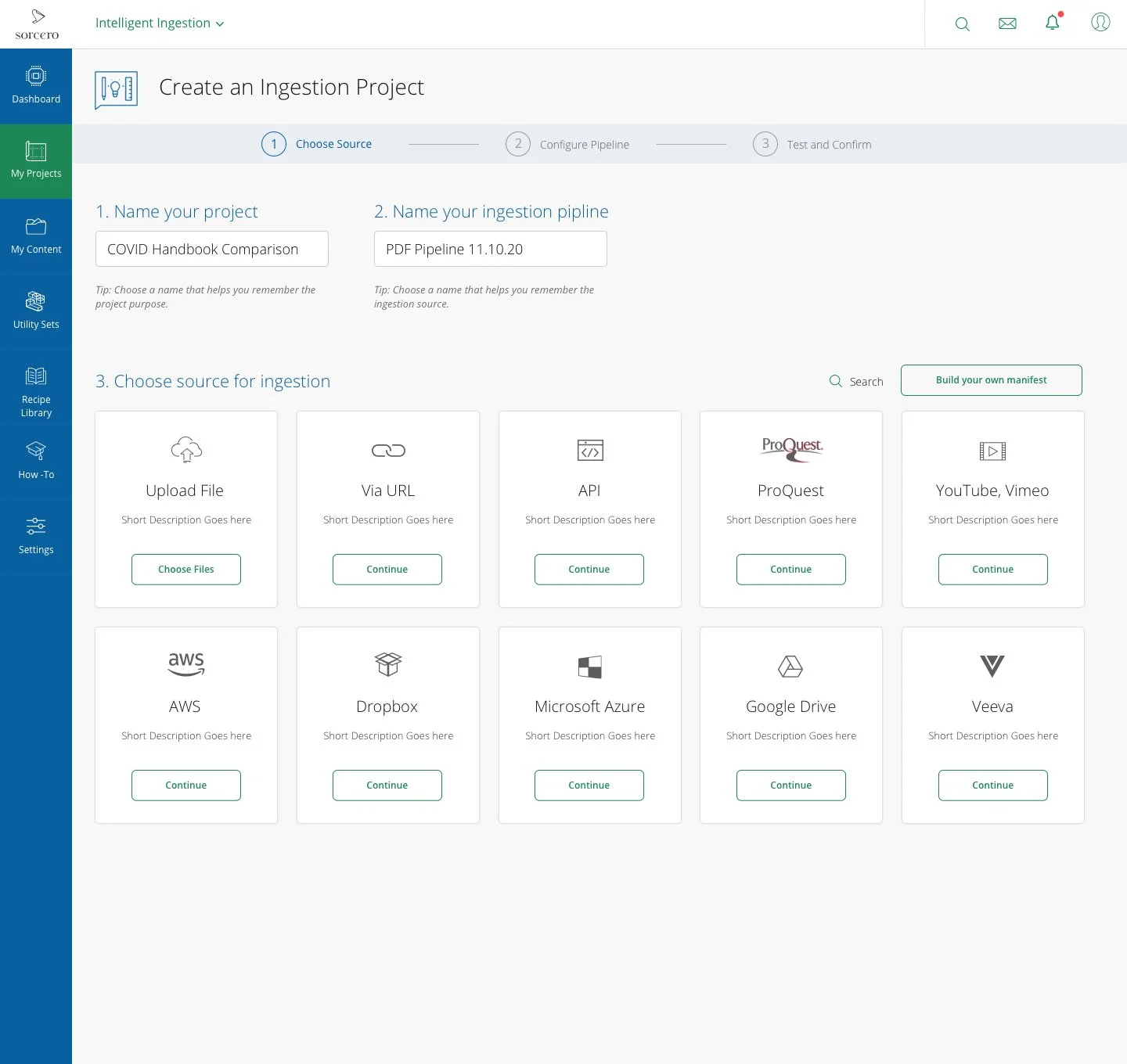
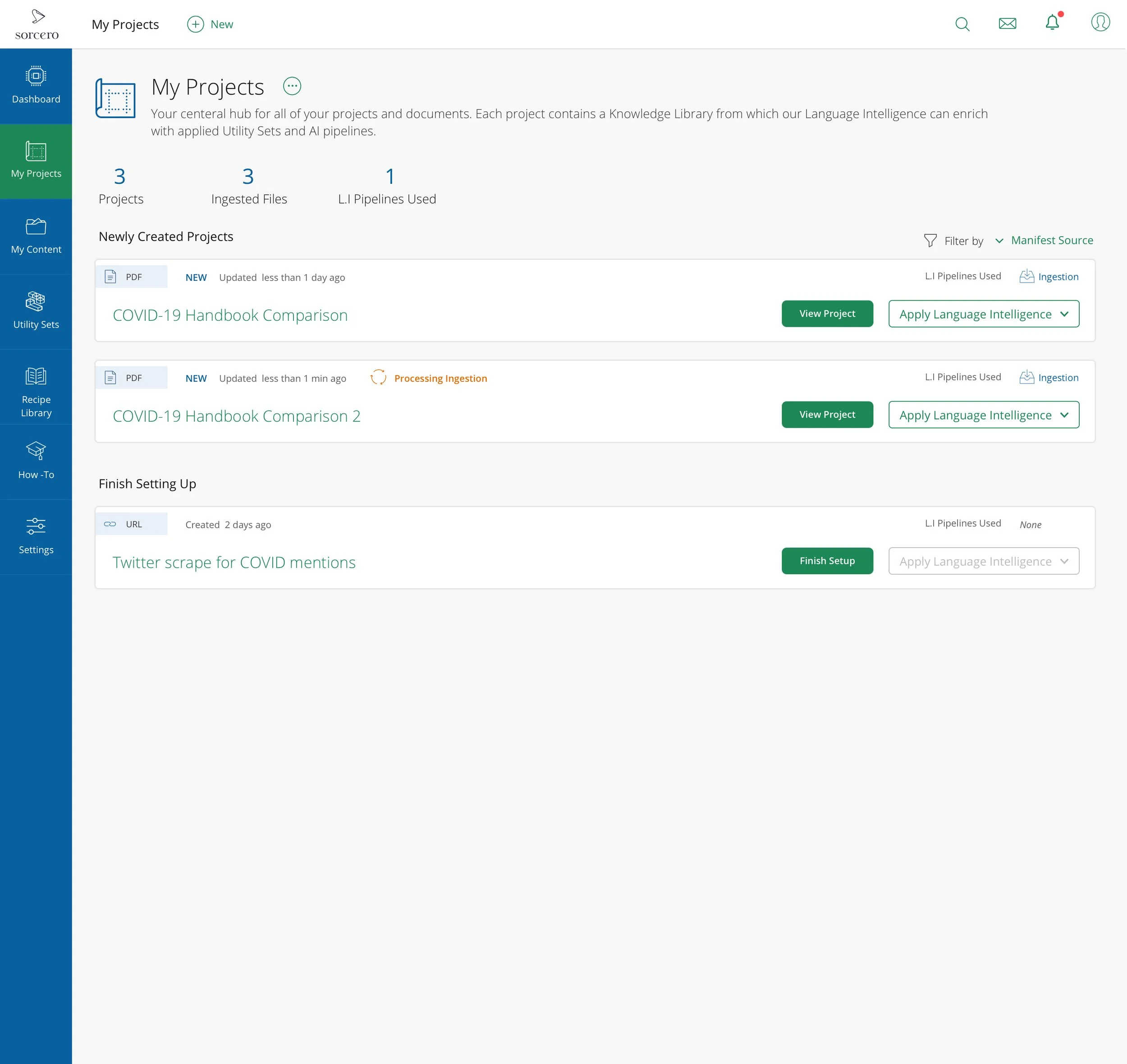
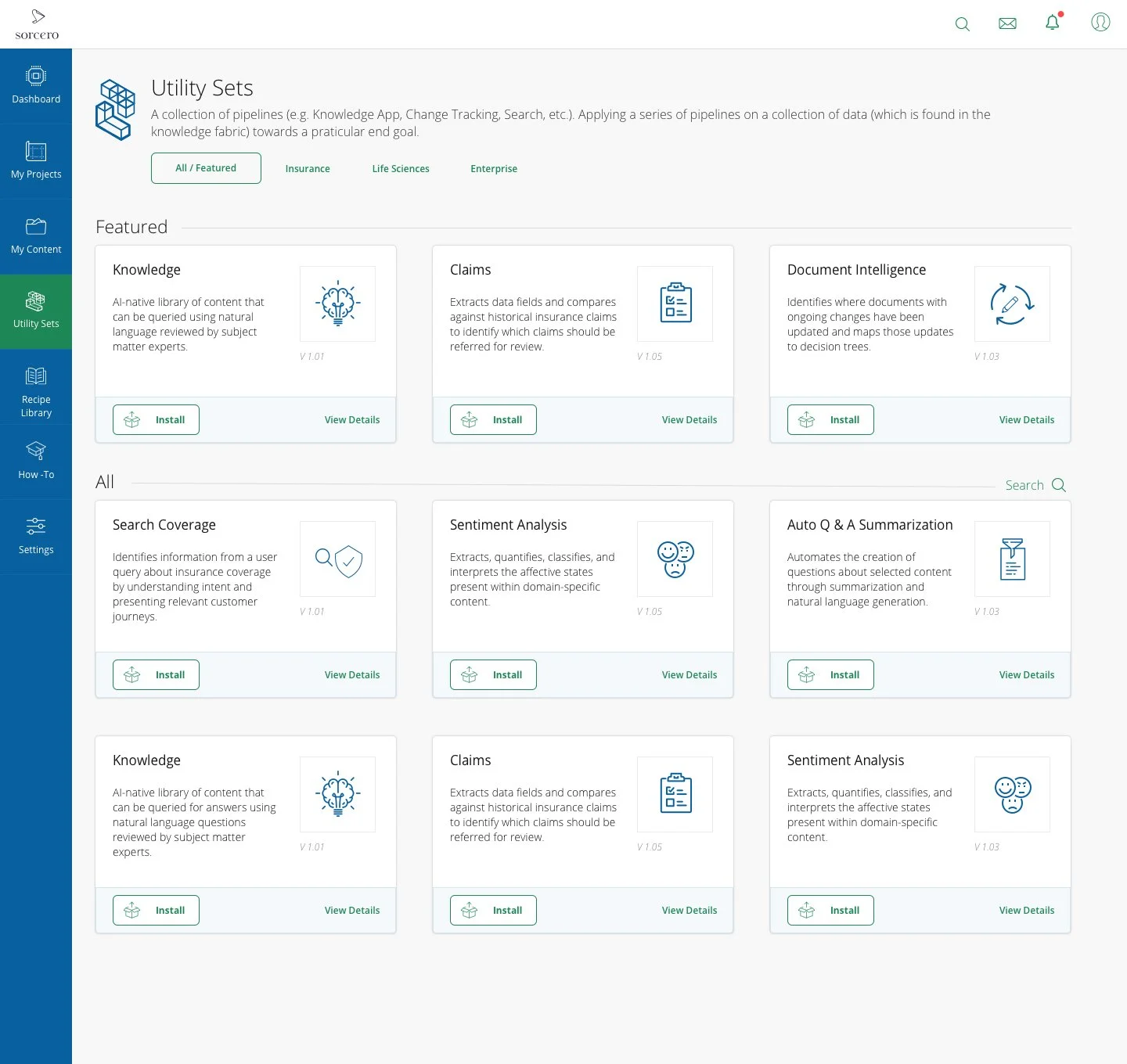
One of the most significant decisions was defining the platform’s core workflow model. Rather than presenting AI capabilities as isolated features, we structured the experience around projects, ingestion pipelines, and utility sets — translating technical architecture into product concepts enterprise users could understand.
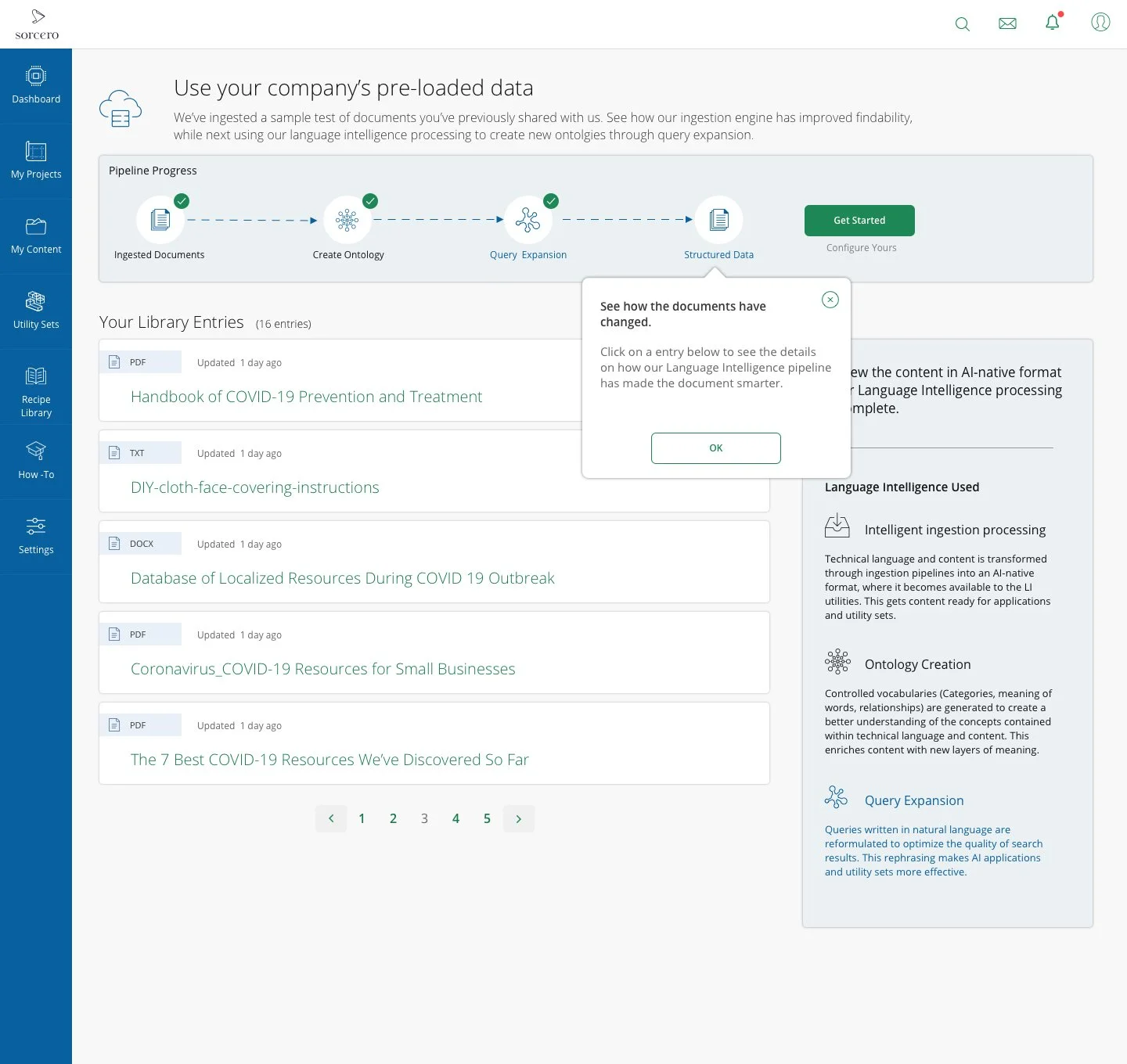
Ingestion became a structured experience: naming projects, selecting data sources, configuring pipelines, enriching content, and applying layered processing toward defined outcomes. These steps were intentionally surfaced in a way that made complex orchestration feel coherent rather than abstract.
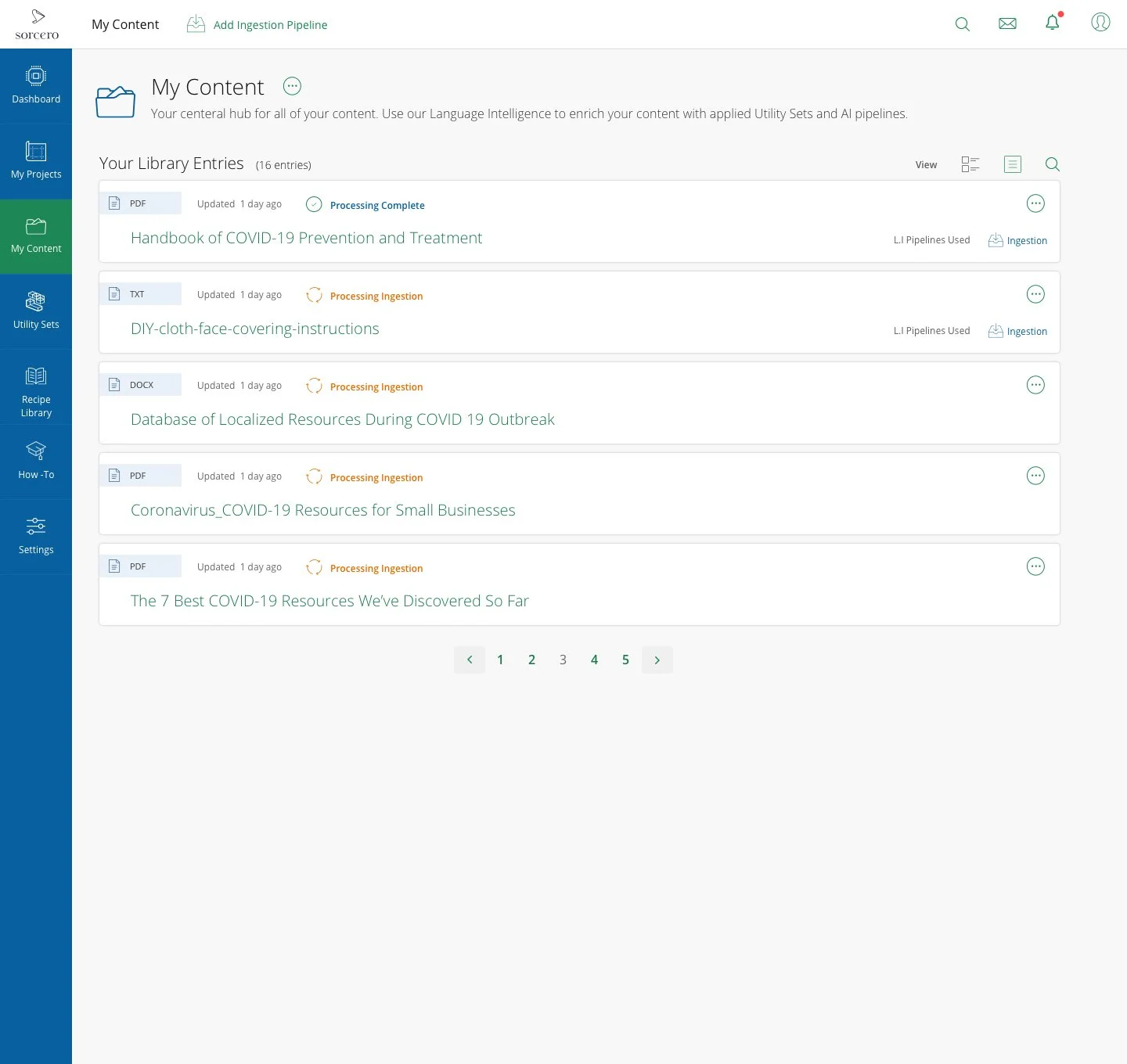
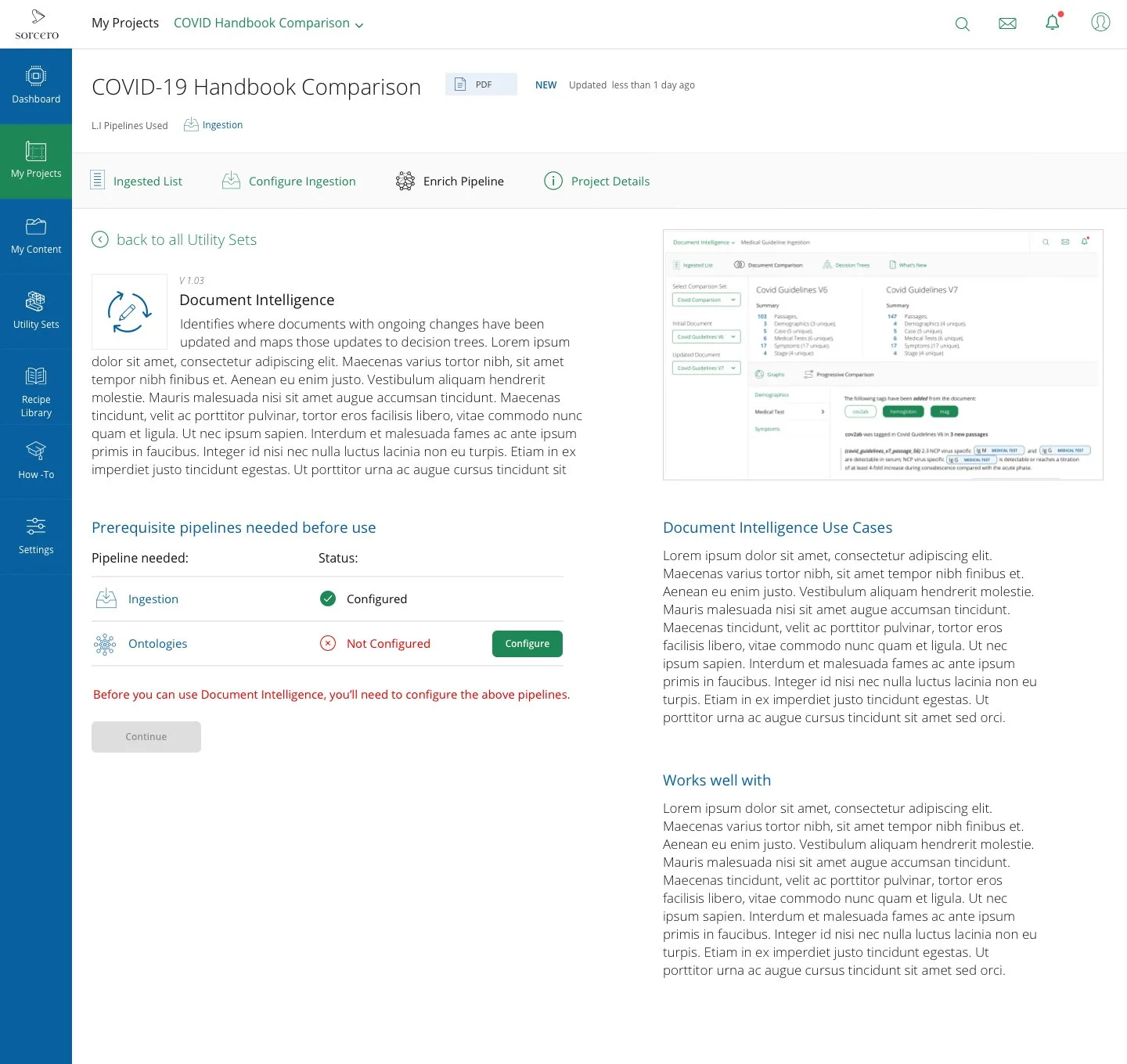
Navigation was another critical decision point. The platform required deep, multi-tier architecture — project-level views, ingestion lists, pipeline configuration, enrichment layers, and detailed content views. We designed a structured left-hand navigation model supported by contextual second- and third-tier layers, ensuring users could orient themselves within both a specific workflow and the broader system.
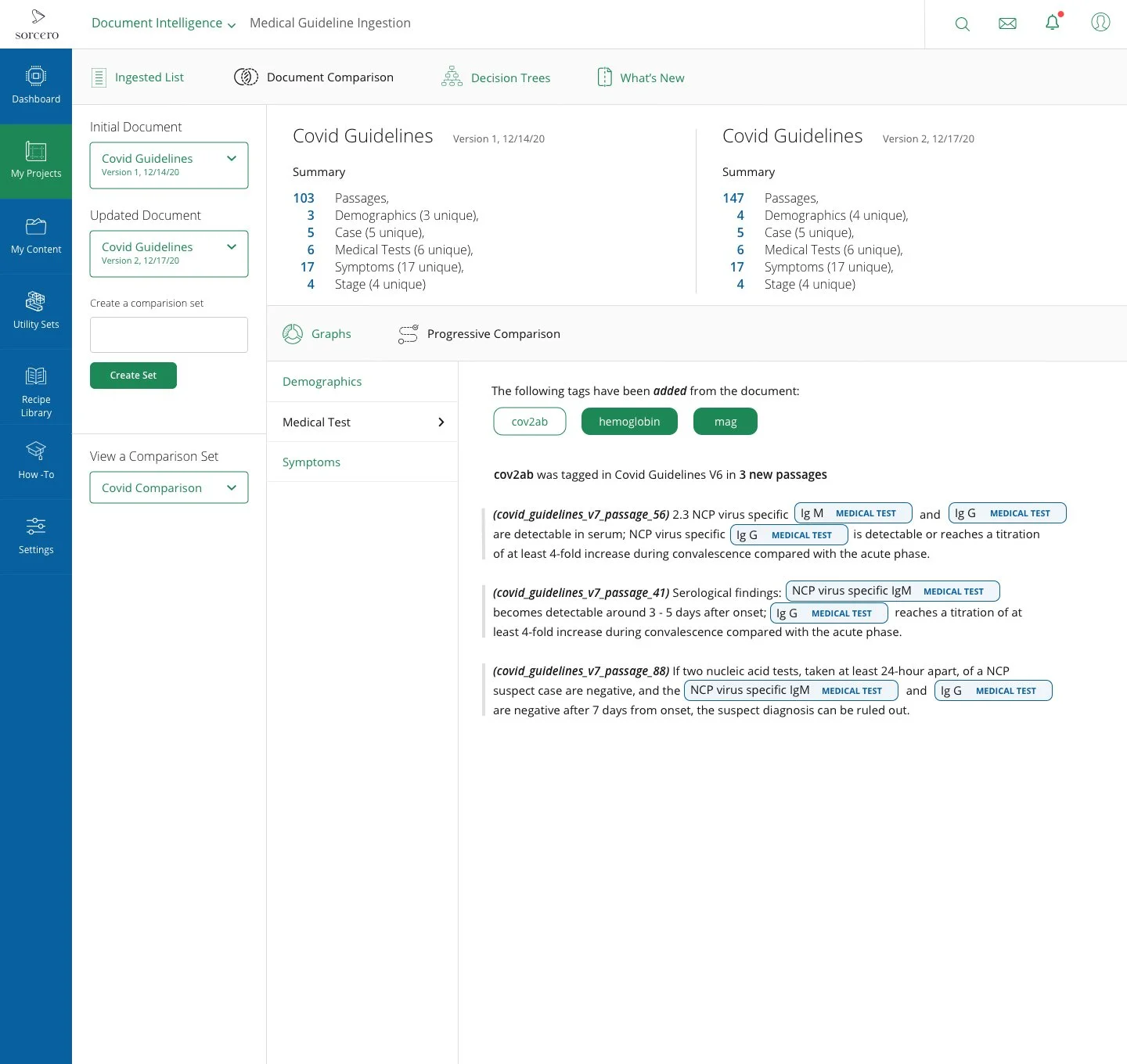
Equally important was deciding how and where intelligence surfaced. Dashboard views, document comparisons, and enriched outputs were designed to make AI-driven insights interpretable and actionable rather than opaque.
These decisions established the foundational UX architecture that transformed technical capability into a navigable, enterprise-ready platform.
The Work
The work began with defining and mapping user journeys in collaborative workshops, translating abstract AI capabilities into structured product flows. Early-stage concepts were developed in Mural to clarify architecture, navigation depth, and how ingestion and pipeline orchestration should surface within a usable platform.
From there, detailed UX flows and high-fidelity designs were created in Figma, supported by interactive prototypes to validate direction internally and with early users. While formal usability testing was limited at this stage, continuous feedback loops with stakeholders and pilot customers informed rapid iteration.
Complex ingestion processes, layered pipeline configurations, and multi-tier navigation models were refined through repeated cycles of design and review. The goal was not just to make the interface functional, but to ensure users could orient themselves within a deeply technical system and understand how intelligence was being applied to their data.
Beyond product UX, the work also influenced how Sorcero positioned its platform externally. By structuring how capabilities surfaced within the product, we indirectly shaped how the platform was communicated to enterprise buyers.
Outcome
Following this work, Sorcero had a defined, functional platform where previously there had been only capabilities and pilots.
The company could now demonstrate a cohesive product experience to enterprise buyers rather than presenting isolated technical components. Complex AI workflows were surfaced through structured navigation and interpretable outputs, giving stakeholders something tangible to evaluate, adopt, and scale.
The platform established the foundational UX architecture for Sorcero’s evolution from experimental implementations to a formalized, enterprise-ready offering. It transformed advanced technical capability into a product that could be positioned, sold, and expanded.